The Coluna Plate The oldest machine in the city, at the end of a bar with eleven years left
Polished brass in a filthy cave, a fire in its own foot, and a hand cast into the iron where only one person can reach it.
What it shows
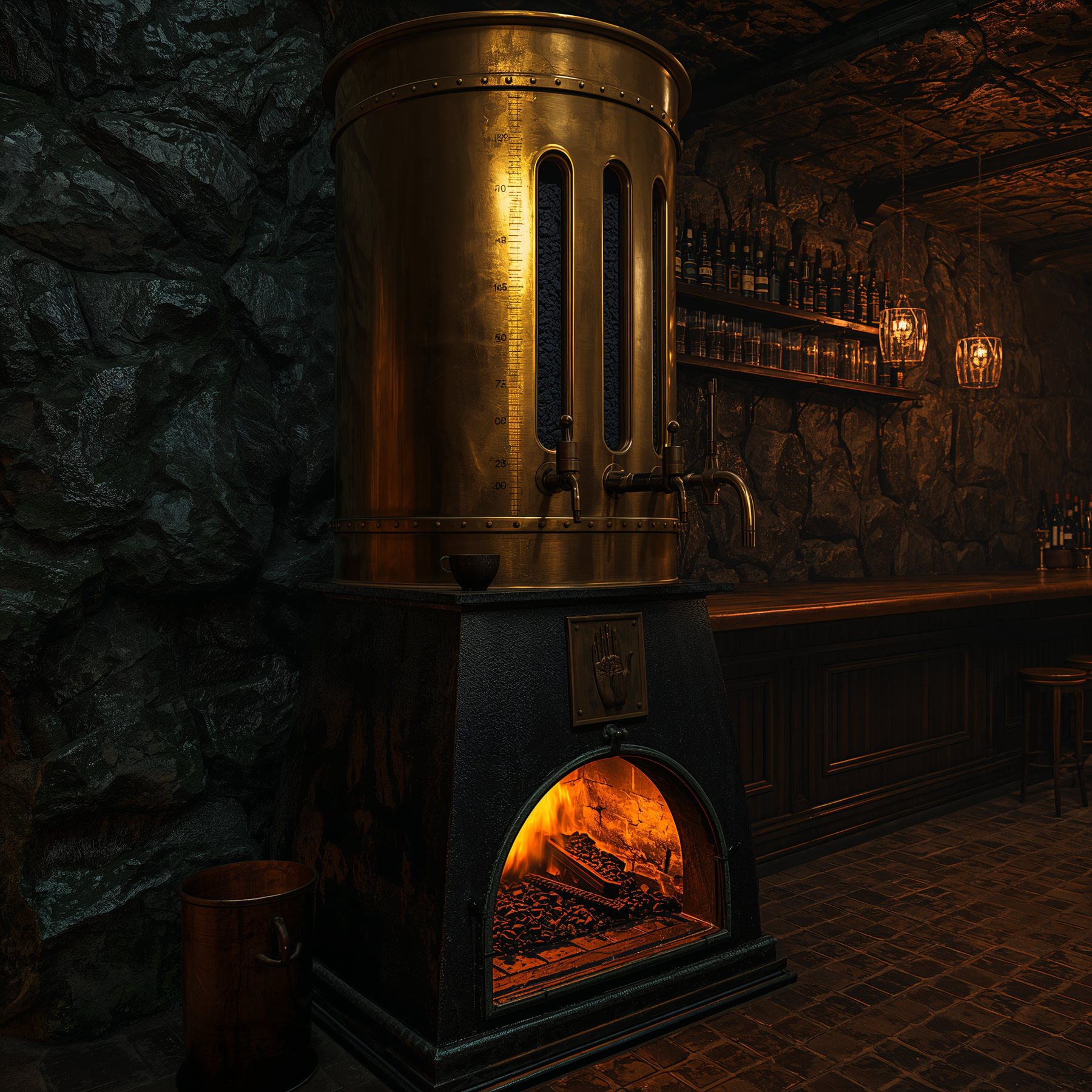
Everything about this object that can be seen from where a customer stands. The riveted brass drum; the three slots with their lead weights hanging at three different heights; the engraved scale running up the brass, which is how the keeper reads the rate of fall and corrects the mill without tasting anything; three spouts and a cup; and the black iron plinth with its fire door open.
It also shows the thing the whole machine rests on and never states, which is that somebody looks after this. The rock is streaming wet and the ceiling is black with tallow. The brass is not.
Three slots, three weights, three heights. The drink is the weight: you order a nine, and a nine runs eleven beats.
In the plinth, not the wall. It has not been out in two hundred years and it travels lit. Nobody has ever called it an everlasting light.
Cast into the iron beside the fire door, at the height of a crouch. No customer can reach it. It is worn bright anyway.
A counter, stools, bottles and two drops hanging on their cords. A house that will be somewhere else in eleven years.
The plate itself is not legible here, and that is correct. Six inches of brass beside the middle head, engraving worn shallow, with a palm-shaped patch rubbed to a mirror where a letter used to be. The shortest name on the oldest object in the building. You would have to stand where the keeper stands to read it, and there is nothing left to read.
What is missing from this view
The rack of dead weights on the wall, hung in a graded row, each one stamped — the spare drinks, waiting.
The glass sight-tube up the side, which shows the water level and has never once appeared in any attempt at this picture.
The keeper. Deliberately. This world does not write down the people who tend machines (the unrecorded), and a picture that rendered her face in loving detail would be lying about the world. When she is drawn she will be present and unreadable — a forearm, a back, a shape in the steam.
And you cannot walk round it. In this view the machine is against the rock. It should stand proud at the end of the bar with floor all the way round, because people do walk round it, and that is where half the wear comes from.
The plate set
No single image holds this object — the same problem as the city, for the same reason. Every addition to the frame costs something already working.
So the Coluna gets a set:
I — the object. This one. II — the fall: one slot, the weight mid-slide, the graduated brass beside it, and nothing else in frame. III — the fire: crouched at the plinth, door wide, the hand beside it. IV — the keeper: last, and unreadable.
What it is, out here
A Leonardo render, Lucid Origin, the fifth round of five and the fortieth image of this object. The prompt that made it, the four rounds that failed, and the rules learned from them are all in Document 05.
Three things in it were not asked for and were kept: the coal scuttle, the two drops hanging over the bar — which is the whole of Document 14 — and, three rounds earlier and entirely unprompted, the hand.
Master file: Coluna Plate I.jpg in the project folder, 2880px square.
Type
Plate
one image · one machine
Status
Canon
Related
Open on this plate
- Plate II — the fall
- Plate III — the fire
- Plate IV — the keeper